What ASEAN Is and Why Southeast Asia's Bloc Matters

The Association of Southeast Asian Nations groups ten countries, hundreds of millions of people, and some of the world's fastest-growing economies. Less flashy than the EU and looser than a trade bloc, ASEAN has nonetheless become central to the region's stability and prosperity — and to great-power competition.
Founded amid Cold War tensions, ASEAN's original purpose was to keep Southeast Asia's diverse states talking rather than fighting. That mission expanded into economic integration, and today the bloc anchors a web of trade agreements spanning the wider Indo-Pacific.
The consensus model
ASEAN's defining feature is its way of deciding: by consensus, with strict non-interference in members' internal affairs. This "ASEAN way" lets wildly different political systems coexist — democracies, one-party states, monarchies — but it also means the bloc moves at the pace of its most reluctant member and struggles to confront internal crises.
Critics call it toothless; members call it the price of unity. The model has kept the peace among members for decades, which in a region with ASEAN's history is no small achievement.
Trade wins and economic gravity
Economically, ASEAN has been a quiet success. Internal tariffs have fallen dramatically, supply chains crisscross the region, and the bloc sits at the heart of the world's largest trade agreement by population. For multinationals diversifying supply chains, "ASEAN" is increasingly the answer.
The region's growth story — young populations, rising consumption, strategic location — gives the bloc economic gravity that commands attention in every major capital.
- Ten members decide by consensus under a strict non-interference norm.
- The model preserves unity but limits action on internal crises.
- ASEAN anchors regional supply chains and major trade agreements.
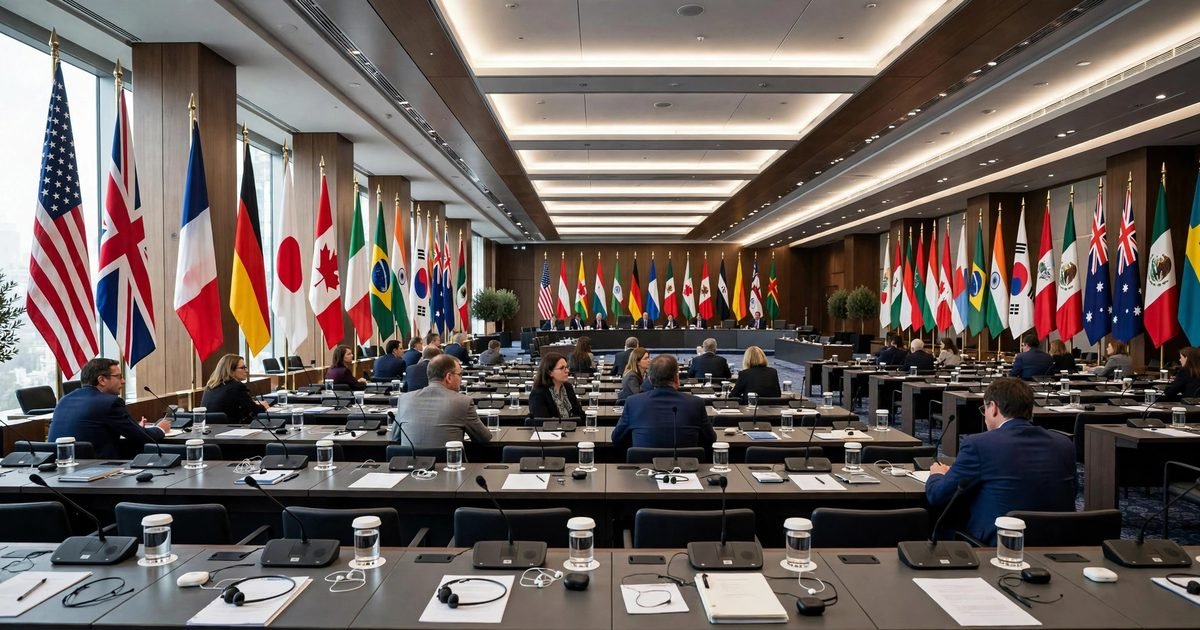
ASEAN's convening power extends through its dialogue partnerships — regular summits with major powers that make it the region's diplomatic switchboard. This "ASEAN centrality" is both an achievement and a burden: everyone wants the bloc's endorsement, but rival powers pull it in opposite directions. Maintaining neutral ground while delivering substance is the permanent high-wire act.
The bloc's economic ministers meet regularly to chip away at non-tariff barriers — the product standards, licensing rules, and customs procedures that matter more than tariffs in practice. Progress is incremental and rarely makes headlines, but each harmonized standard shaves costs for businesses operating across borders. It is unglamorous work that compounds quietly into real integration.
Between giants
ASEAN's hardest test is geopolitical: maintaining centrality as US-China rivalry intensifies. Members want the security and market access both powers offer without choosing sides — a balancing act that grows harder as pressure to align increases.
Whether ASEAN can remain the region's convening power, rather than becoming its battleground, will shape Southeast Asia's century.
Related Stories
 World
WorldHow International Students Reshape Universities and Cities
Tuition economics, campus culture, and housing impacts: the global student mobility story.
 World
WorldHow Cities — Not Nations — Are Leading on Climate Action
City-led climate networks are bypassing national gridlock with building codes, transit, and procurement power.
 World
WorldWhy Southeast Asia Is the New Manufacturing Frontier
Supply-chain shifts, industrial parks, and the workforce story behind the region's factory boom.